
EUROSION – European Soil Erosion Monitoring and Modelling Network for Sustainable Agricultural Land Management

Ongoing

Europe

Soil information products

Information products & services for SLM

/media/50ielbiq/andries_bosma.jpg

Andries Bosma,

Project manager

Project start
2025
Project end
2030

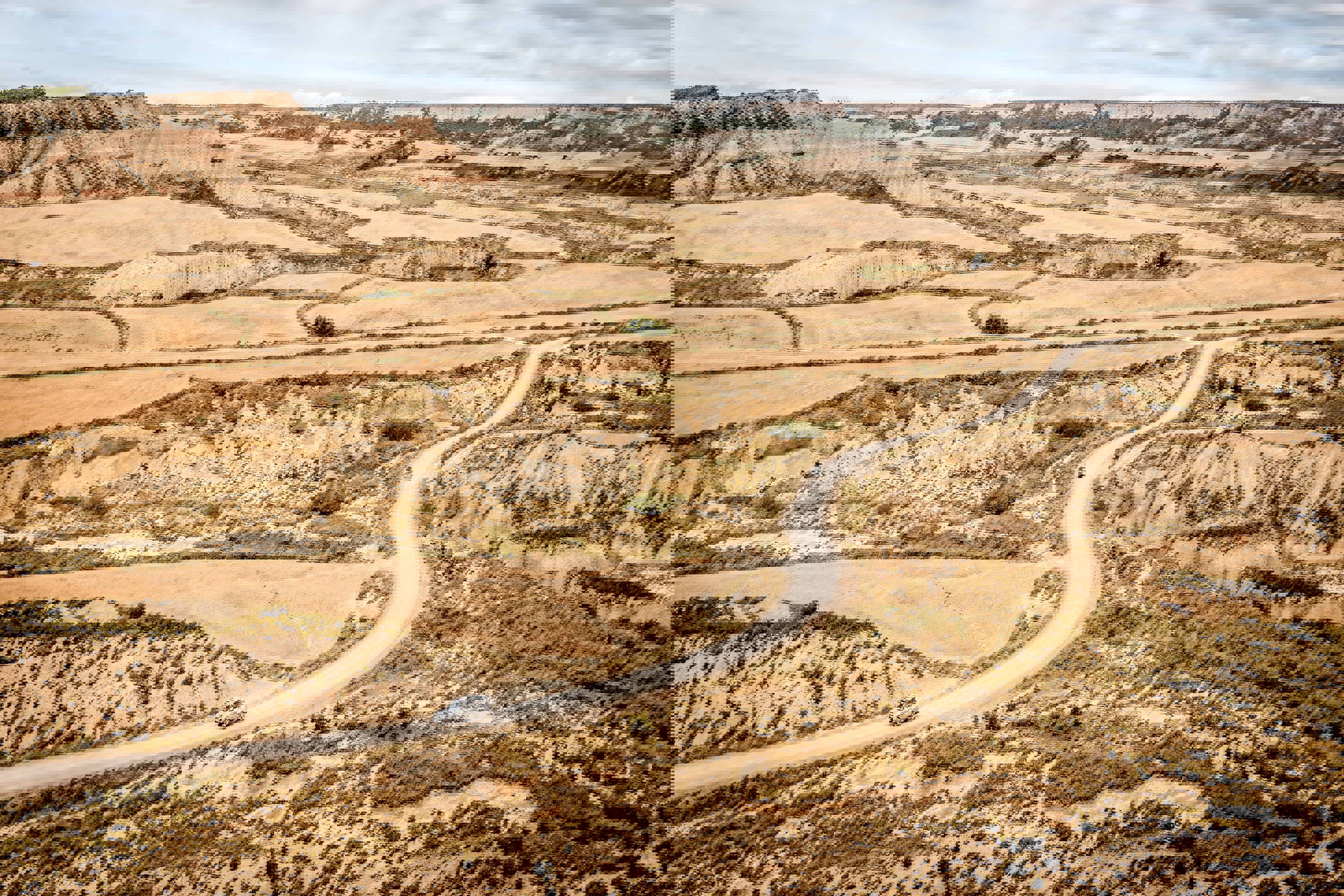
Soil erosion is one of the most severe threats to soil health in Europe . It reduces soil fertility, lowers agricultural productivity, increases flood and sedimentation risks, and affects water and air quality. Despite its importance, Europe currently lacks a harmonised and dynamic system to monitor soil erosion in space and time. Most existing assessments are based on static maps and long-term averages, which do not capture how erosion changes with weather extremes, land management practices, or climate change.

EUROSION aims to change this by developing a pan-European dynamic soil erosion monitoring and modelling system. The project brings together field monitoring, Earth observation, process-based erosion models, and digital platforms to provide up-to-date and comparable information on soil erosion by water, wind and tillage across Europe.

Within EUROSION, ISRIC – World Soil Information provides and integrates European soil data and dedicated soil property maps . ISRIC ensures that soil information is harmonised, scalable, and suitable for use in erosion models and digital platforms, through its expertise in soil data infrastructures and global soil mapping.

Objectives

EUROSION aims to develop a pan-European dynamic soil erosion monitoring and modelling system that can assess the status and spatio-temporal changes of soil erosion across Europe. The project aims to:

  1. Establish a multi-scale European soil erosion monitoring network , linking local, national and European initiatives.

  2. Develop a harmonised soil erosion monitoring scheme using field measurements, remote sensing and citizen science approaches.

  3. Improve and integrate process-based models for water, wind and tillage erosion to better represent erosion processes across different scales.

  4. Create an open-access, user-friendly dynamic European soil erosion monitoring platform for data sharing, modelling and visualisation.

  5. Quantify the impact of land management practices on soil erosion under different soil, climate and cropping conditions.

  6. Provide practical recommendations to farmers and land managers on soil erosion mitigation practices.

  7. Support national and European policies with scientifically robust and up-to-date soil erosion information.

Activities

ISRIC contributes to EUROSION through the following key activities:

  • Inventory and documentation of existing European soil and erosion datasets (e.g. Copernicus products, European Soil Database, soil property maps).

  • Harmonisation and preparation of soil data for erosion models at European scale.

  • Support data requirements for process-based soil erosion models.

  • Development of assessment frameworks to analyse uncertainties and scale effects in erosion modelling.

  • Contribute to calibration and validation of erosion models using consistent soil information.

  • Integration of soil datasets and model outputs into the European Dynamic Soil Erosion Monitoring Platform.

  • Support to data architecture design and interoperability with European infrastructures such as EU Soil Observatory (EUSO) and Copernicus.

  • Contribution to policy-relevant outputs on soil erosion mitigation and land management.

Deliverables

Key ISRIC-related deliverables include:

  • An EU-wide inventory of soil erosion datasets and platforms.

  • Harmonised soil property datasets and maps targeted to support erosion modelling.

  • A framework to assess uncertainties and sensitivities of soil erosion models across scales.

  • Contributions to improved European erosion models for water, wind and tillage erosion.

  • Soil data layers integrated into the European Dynamic Soil Erosion Monitoring Platform.

  • Soil-related inputs to scenario modelling on land management and policy impacts.

Consortium

The EUROSION consortium consists of the following partners:

  • Wageningen University (WU) – Netherlands

  • Katholieke Universiteit Leuven (KUL) – Belgium

  • Cardiff University (CU) – United Kingdom

  • University of Padova (UNIPD) – Italy

  • Leibniz Centre for Agricultural Landscape Research (ZALF) – Germany

  • University of Twente (UT) – Netherlands

  • University of Bern (UBERN) – Switzerland (associated partner)

  • Netherlands Institute for Space Research (SRON) – Netherlands

  • Laboratoire Interuniversitaire des Systèmes Atmosphériques – CNRS (LISA-CNRS) – France

  • Institut d’Écologie et des Sciences de l’Environnement de Paris – IRD (iEES-Paris / IRD) – France

  • Institute of Arid Regions (IRA) – Tunisia

  • Norwegian Institute of Bioeconomy Research (NIBIO) – Norway

  • Çanakkale Onsekiz Mart University (COMU) – Türkiye

  • Institute for European Environmental Policy (IEEP) – Belgium

  • The Cyprus Institute (CYI) – Cyprus

  • University of Iași (UAIC) – Romania

  • University of Almería (UAL) – Spain

  • VARDA – Germany

  • International Soil Reference and Information Centre (ISRIC) – Netherlands

  • University of Gloucestershire (UoG) – United Kingdom

  • HFFA Research GmbH (HFFA) – Germany

  • Cambisol (CAMBISOL) – Netherlands

  • Euroquality (EQY) – France

Funding

This project is funded by the European Union under Horizon Europe,

Topic: HORIZON-MISS-2024-SOIL-01-03 Towards a dynamic monitoring system to assess status and spatiotemporal changes of soil erosion at European scale.

Suggested content

Share