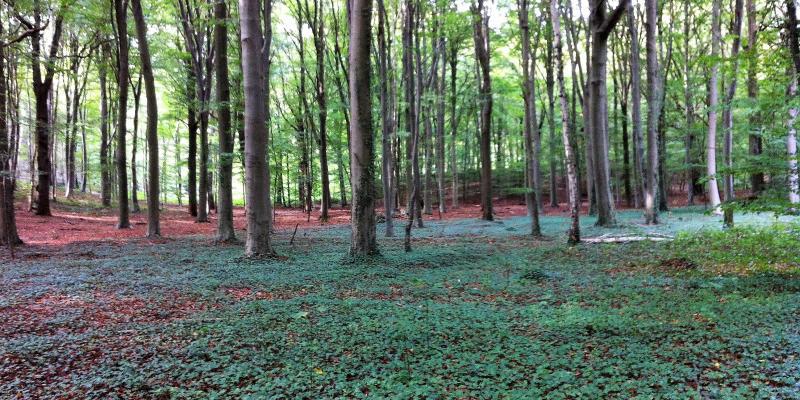


Forests cover approximately 35 percent of Europe, provide employment for 3.5 million people, generate € 500 billion revenue annually and absorb about 10 percent of Europe's annual greenhouse gas emissions. Sustainably managing forest soils, which underpin these key forest benefits, is key to caring for these important ecosystems. Beyond primary productivity (growth and yield), forest soils fulfill many specific functions that are often economically undervalued: water regulation, climate regulation and carbon sequestration, soil biodiversity and habitat provisioning, and nutrient cycling. Currently, there are significant knowledge gaps on forest soil processes and insufficient soil monitoring limits the European Union’s ability to maintain soil-related ecosystem services and to reach climate policy targets.
A new project, HoliSoils, coordinated by the Natural Resources Institute Finland (Luke) will address these gaps. HoliSoils (Holistic management practices, modelling and monitoring for European forest soils) is a new EU Horizon 2020 project which will provide an improved, integrated, and harmonised monitoring and modelling framework for forest soils across Europe.
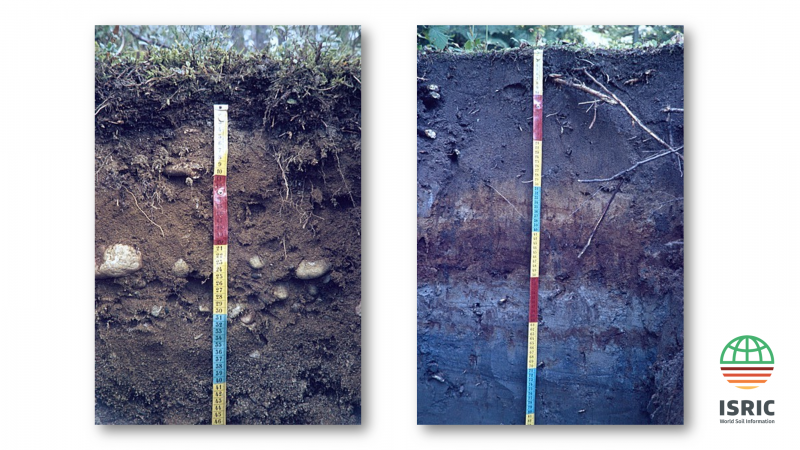
“We have such wide expertise from soil scientists to mathematicians and social scientists that we can address timely and challenging global problems on sustainable soil management and mitigation of climate change,” said HoliSoils coordinator Raisa Mäkipää. ISRIC - World Soil Information will lead the development of a database on harmonised forest soil information and supports work package leader Thuenen Institute with upscaling this information through forest soil maps on bulk density, pH, carbon and nitrogen concentrations and texture. These maps will use machine learning algorithms, similar to those in SoilGrids. All information will be made freely available through an open access platform with support from our spatial data infrastructure team.